The Future of Production: Fast, Personal, and Human at Its Core

The Future of Production: Fast, Personal, and Human at Its Core

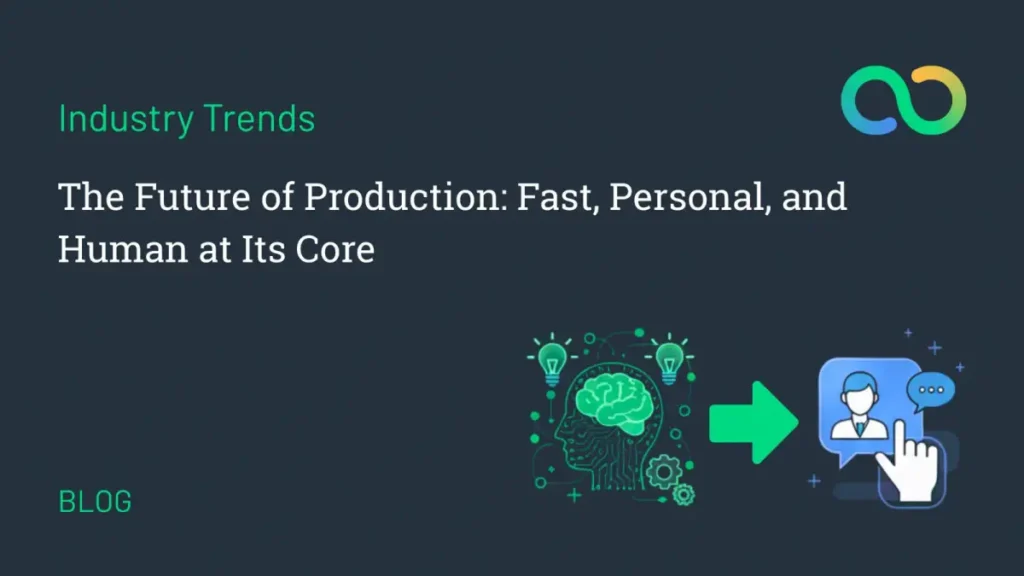
The way we make things is changing. Factories are no longer just about scale and efficiency—they’re about agility, personalization, and blending human creativity with AI-driven power. At Adaptiv, we believe the future of production isn’t about machines replacing people, but about AI and humans working together to deliver faster, cheaper, and smarter results.

Speed and Cost: Where AI Shines

AI is reshaping production by doing the heavy lifting behind the scenes:

Design in Minutes, Not Months

Generative AI can produce dozens of design options in the time it used to take to sketch one. Car makers, for example, are already using AI to generate lightweight, test-ready chassis designs that shave weeks off development cycles.

Factories That Think for Themselves

Agent-based AI systems now monitor and adjust production lines in real time. Instead of waiting for something to break, AI predicts issues before they happen, saving money and downtime.

Robots That Work With, Not Against, People

Cobots (collaborative robots) handle repetitive or risky tasks while human workers focus on creativity, quality, and problem-solving.

The result? Faster cycles, lower costs, and a foundation for scalable growth.

Personalization at Scale

Traditionally, mass production meant uniformity. AI flips that equation.

Customized Products Without Slowing Down

Whether it’s consumer goods or healthcare tech, AI makes it possible to personalize products to individual preferences while maintaining efficiency. Leaders in personalization are already seeing up to a 25% boost in ROI and higher customer engagement rates.

Data Meets Experience

By pairing AI’s analytical power with human judgment, companies can deliver experiences that feel tailored—without sacrificing scale.

Real-World Examples of Smarter Production

This isn’t theory—it’s already happening:

Florasis (Beauty Industry, China)

Their “smart factory” integrates AI for quality checks, defect detection, robotic handling, and real-time monitoring, enabling them to produce 50 million units annually while improving consistency and speed.

Priestley’s Bakery (Australia)

An AI-powered facility now uses autonomous vehicles and cobots to streamline processes. The result: doubled capacity, lower costs, and more time for skilled workers to focus on craft and creativity.

Next-Gen Logistics

Emerging tech like AI-powered magnetic levitation conveyors is cutting energy use and maintenance needs, proving that even the smallest parts of the production line can benefit from smarter systems.

Why Humans Still Matter

Even as AI takes over more of the middle steps of production, the first and last steps still belong to us:

The Beginning: Human creativity, vision, and strategy drive what gets made in the first place. AI can suggest designs, but people define the “why.”

The End: Final touches, quality assurance, and decisions rooted in empathy and context are human strengths that AI can’t fully replicate.

Experts agree that AI won’t replace humans—it will amplify us. Companies that succeed will be those that use AI to free up time and energy for people to do what only people can do: innovate, connect, and lead.

Adaptiv’s Perspective

At Adaptiv, we see a clear path forward:

  1. Human vision starts the process.
  2. AI makes it faster, cheaper, and scalable.
  3. Human judgment finishes it—ensuring quality, empathy, and trust.

This hybrid future makes production more than just efficient—it makes it personal, meaningful, and sustainable.

The future of production isn’t about automation replacing tradition. It’s about a smarter partnership: AI streamlining the middle while humans remain the driving force at the start and the finish. When the two merge, businesses unlock speed, cost-efficiency, personalization, and scale—without losing the human essence that makes products worth creating in the first place.

Sources: 

Zero-Party Data in Healthcare Marketing: Why It Matters

Modern healthcare marketing is evolving rapidly—and at the heart of that evolution lies one powerful tool: zero-party data. This type of data isn’t just following what users click or how they browse—it’s what they willingly tell you themselves. In an industry where trust and privacy aren’t optional, zero-party data is transforming how brands connect with patients on a personal, meaningful level.

What Is Zero-Party Data?

Zero-party data is information that individuals intentionally and proactively share with a brand—whether that’s their preferences, health goals, or communication choices. Unlike behavioral tracking or inferred insights, this data comes straight from the source—making it highly accurate, truthful, and context-rich.

Why It’s Especially Valuable in Healthcare

1. Trust Through Transparency & Consent

Zero-party data relies on explicit consent, making it compliant with regulations like HIPAA. When patients know their data is being used responsibly—and they chose to share it—the foundation of trust only gets stronger.

2. Boosted Personalization, Better Engagement

Patients crave content that’s tailored to their needs—especially when it pertains to their health. Zero-party data lets marketers craft highly relevant messages and experiences that feel genuinely helpful. And since they opted in voluntarily, conversion and engagement rates reflect that clarity.

3. Privacy-Friendly & Future-Proof

With third-party cookies phasing out and privacy demands rising, zero-party data is emerging as a privacy-compliant, sustainable alternative. It shifts the balance back to patients—going from passive surveillance to active collaboration.

4. Enables Richer Patient Insights

By directly gathering patients’ health goals, communication preferences, or wellness interests, organizations can build nuanced engagement strategies, leading to deeper relationships and more informed care journeys.

How to Implement It (Without Being Intrusive)

  • Offer Value in Exchange Patients respond best when they receive something in return—tailored wellness tips, appointment reminders, exclusive content—make the benefit clear before asking for data.
  • Keep It Simple and Transparent Use short surveys, preference centers, or health quizzes that clearly explain why you’re asking for the information and how it will be used.
  • Refresh Regularly Patient health and preferences evolve. Build opportunities for patients to update their info over time to keep personalization relevant and accurate.

Bringing It Back to Adapdiv: How We Can Help

At Adapdiv, we understand that personalization—and patient trust—start with intentional collaboration, not inference. Here’s how we bring zero-party data to life for healthcare brands:

  • Consent-Driven Engagement Tools — We design surveys, preference centers, and content intake experiences that feel intuitive, valuable, and privacy-first—so patients feel safe sharing, and brands gain actionable insights.
  • Privacy-Aligned Strategy — Our approach is built around HIPAA compliance, data ethics, and regulatory clarity—so personalization never comes at the expense of patient trust.
  • Data Activation Across Channels — Whether it’s email, web, or in-app messaging, we help you transform explicit patient data into dynamic, relevant journeys—without becoming invasive.
  • Insightful Segmentation & Storytelling — Zero-party data empowers deeper audience segmentation. We turn those insights into human-centered stories—like health journey narratives or tailored wellness content—that truly resonate.

In Summary

In healthcare marketing, zero-party data isn’t just a strategy—it’s a statement. It says: “We respect your choices, understand your needs, and value your trust.” By building personalization off the foundation of consent and clarity, brands can deliver messaging that actually matters—while honoring the privacy and dignity of the patient.

Why Free Trials Don’t Work for Enterprise SaaS (And What to Do Instead)

Free trials are great—if you’re selling a $10/month tool.

But for complex B2B SaaS products, especially at the enterprise level, they often miss the mark. That’s because enterprise buyers aren’t just exploring features—they’re managing organizational change, risk, and internal consensus. And a trial doesn’t address those concerns.

4 Reasons Free Trials Don’t Work For SaaS Products

Here’s what actually moves the needle in enterprise sales—and how to rethink your trial strategy accordingly.

1. Free Trials Create Risk Instead of Reducing It

For a business, even a “free” trial isn’t frictionless. It requires time, effort, and cross-team buy-in. That can feel like a burden—not a benefit.

What to do instead:
Use satisfaction-based language to reassure buyers (“cancel anytime,” “fully supported,” “risk-free pilot”). Offer guided demos or opt-in proof-of-concept programs with defined success metrics to ease adoption concerns.

2. Enterprise Buyers Trust References More Than Features

B2B buyers want confidence that your product works—not just that it exists. They trust what others say about you more than what you say about yourself.

What to do instead:
Lead with reference stories, customer logos, and use cases. Highlight success in similar industries or company sizes. Make it easy for prospects to connect the dots between your product and their reality.

3. No One Converts Without Support

Free trials often leave prospects alone to “figure it out.” That’s fine for simple tools—but enterprise buyers expect guidance.

What to do instead:
Offer access to an account manager or solutions consultant during the buying process. Personalized support, onboarding, and regular check-ins reduce drop-off and increase confidence in moving forward.

4. Frame Your Product as the Standard

If your messaging positions the product as something to “try,” it may sound unproven. Buyers want to feel like they’re choosing what the market already trusts.

What to do instead:
Position your product as the default choice in your space. Use data, market share, and recognizable clients to show that you’re not the experiment—you’re the safe bet.

Rethinking the Goal

Free trials aren’t obsolete—they just aren’t the best tool for high-consideration sales. When you’re selling to enterprise buyers, the real goal isn’t giving access. It’s giving confidence.

That means:

  • Reducing perceived risk
  • Supporting the buyer journey
  • Leveraging proof over promotion
  • Showing how your product becomes a standard, not a maybe

Need to Shift Your SaaS GTM Strategy?

At Adapdiv, we help B2B SaaS companies position their products to win trust, reduce friction, and convert complex buyers. If you’re relying on free trials—and still not seeing results—we can help you build a smarter path to adoption.

Let’s talk. Explore our services: https://adapdiv.com/services/

From FDA Approval to Market: Branding Steps You Can’t Skip

Navigating the journey from product approval to market launch in healthcare technology is a high-stakes sprint—where credibility, visibility, and trust must align. Even the most groundbreaking innovations can fall flat without the right branding strategy.

5 Branding Steps For Healthcare Tech Companies

Here are five essential branding steps every healthcare tech company must take once FDA approval is in hand:

1. Translate Your Technical Breakthrough into Human-Centered Messaging

Clinical milestones are important—but your audience connects with what those milestones mean for real people. Clearly articulate how your solution improves care, streamlines workflows, or enhances patient outcomes. That emotional clarity helps build trust.

  • Research on narrative medicine shows us that stories deepen empathy and reflection—transforming clinical success into human impact.

2. Humanize the Brand Through Patient and Provider Narratives

Real stories from real users—patients who regained mobility, clinicians who found relief from burnout—create authenticity no formula can match. These narratives form the emotional backbone of compelling branding.

  • Studies indicate stories are remembered far more than facts—making storytelling a trust-builder in healthcare.
  • Patient experiences bring healthcare to life. Storytelling aligns user needs with your innovation.

3. Build Trust with Transparent, Evidence-Driven Content

Post-FDA, transparency becomes essential. Share your study credentials, trial data, feature limitations—balanced with outcomes. Combining emotion with evidence makes your brand both inspiring and credible.

  • Narratives that stir identification are more persuasive—especially when backed by clear, contextual proof points.

4. Activate a Consistent, Multi-Channel Launch Campaign

Ensure your messaging is unified—from your press release to the website to social media. Consistency across touchpoints reinforces memory, boosts credibility, and builds a unified brand presence.

  • Story-based marketing creates emotional stickiness and deepens meaning across channels.

5. Amplify Through Community and Thought Leadership

Launch isn’t just a media event—it’s an opportunity to engage. Host webinars, collaborate with provider forums, or feature guest content from clinicians. Thought leadership and community presence bring authority.

  • Storytelling helps humanize and build emotional connection with audiences, making your brand relatable.

How Adapdiv Supports Your FDA-to-Market Branding Journey

At Adapdiv, we specialize in elevating healthcare technology from regulatory success to market resonance. Here’s how we help you bridge the gap:

  • Narrative Strategy: We help translate your clinical accomplishments into human-centered brand stories that inspire trust.
  • Storytelling Assets: From patient case videos to provider spotlight stories, we create content that feels both authentic and strategic.
  • Transparent Messaging: We pair emotion with evidence—balancing brand warmth with proof and credibility to win decision-maker confidence.
  • Channel Consistency: We roll out campaigns across PR, your website, social platforms —so your brand presence is cohesive and memorable.
  • Community Engagement: We design conversation-driven initiatives—webinars, content partnerships, thought leadership—that position your innovation at the center of dialogue.

FDA approval is just the start. The real win is launching a brand that resonates, connects, and builds trust.

How the LinkedIn Algorithm Works And How to Make It Work for You

If you’re still treating LinkedIn like every other social media platform, it’s time for a reset.

Unlike TikTok or Instagram, LinkedIn’s algorithm isn’t built for virality. In fact, it’s intentionally designed to limit it. The platform’s core goal is to keep your feed focused on relevant, professional content—ideas, insights, and updates that help you do your job better.

In 2025, that mission has only become more focused. Here’s how the current algorithm works—and how to align your content strategy with it.

Step 1: Quality Filtering

Before your post appears in anyone’s feed, it’s filtered for quality. LinkedIn’s algorithm screens for:

  • Spammy or misleading behavior (like tagging unrelated people)
  • Posts with excessive hashtags (stick to three to five)
  • Poor grammar or formatting
  • Posting too frequently (give at least 12 hours between posts)

If your content passes this initial filter, it moves into the next phase.

Step 2: The Engagement Test

Once live, your post is shown to a small portion of your network to gauge its initial performance. This is often referred to as the “golden hour.”

If the post earns meaningful engagement—especially comments from people in relevant industries—LinkedIn is more likely to push it to second- and third-degree connections.

This early feedback loop is critical. High-value posts can continue to resurface in people’s feeds for days, even weeks, after publishing.

Step 3: Relevance and Reach

From there, the algorithm considers three key factors to determine broader distribution:

  1. Your profile (identity):
    LinkedIn looks at your industry, location, job title, and skills to evaluate whether your content is relevant to certain audiences.
  2. Content performance:
    It measures how long users engage with your post (dwell time), how informative or useful it is, and whether it drives discussion or professional outcomes.
  3. Audience behavior:
    Posts are more likely to appear for users who frequently interact with your content, follow relevant hashtags, or are part of the same professional circles.

What the Algorithm Favors:

LinkedIn has made a few notable updates. Content that performs well generally falls into a few key categories:

  • Original insights: Posts that offer perspective, analysis, or useful takeaways
  • Educational content: How-tos, lessons learned, or professional tips
  • Conversational formats: Posts that invite discussion through thoughtful questions
  • Native content: Text posts, carousels, and video (rather than external links)
  • Evergreen value: Information that’s still useful weeks after it’s posted

The algorithm also favors subject-matter experts. If you consistently post around a specific topic, LinkedIn will begin identifying you as an authority and showing your content to more people.

How to Improve Your Reach on LinkedIn

Here are a few strategic ways to get your posts in front of the right audience:

  1. Lead with a strong hook
    The first three lines are crucial. Use a bold statement or question to draw readers in before the “see more” break.
  2. Focus on timing
    While content can perform well over time, strong engagement in the first hour still matters. Early morning on Tuesdays or Thursdays tends to perform best, but test what works for your audience.
  3. Encourage meaningful engagement
    Ask questions that lead to thoughtful responses. Comments that show critical thinking or relevant experience signal to the algorithm that your content matters.
  4. Be consistent
    Posting once or twice a week helps you stay top of mind and build momentum. The more consistent you are, the more LinkedIn will prioritize your content.
  5. Use native tools
    Polls, carousels, and on-platform video perform better than posts with outbound links. If you need to share a link, consider placing it in the comments instead.

Conclusion

LinkedIn is not about reach for the sake of reach. It’s about visibility among the right people—your peers, your clients, your future partners.

If you want your content to perform in 2025, focus on clarity, consistency, and value. Speak to your niche, engage with your network, and position yourself as a reliable voice in your industry.

Looking for help building a strategy that actually gets seen? That’s where we come in. Let’s connect!

Four Proven Multi-Channel Marketing Tactics for Healthcare Tech Startups

In healthcare technology, having a great product isn’t enough—you need to get it in front of the right people, in the right way, at the right time. That’s where a multi-channel marketing strategy comes in. By reaching your audience through a variety of platforms and touchpoints, you can build awareness, credibility, and trust faster than relying on a single channel.

Here are four proven tactics that help healthcare tech startups punch above their weight.

1. Build an Educational Content Hub

Instead of relying solely on product-focused messaging, create a library of blogs, guides, videos, and webinars that educate your audience about industry trends, pain points, and solutions. This positions your startup as a thought leader, making prospects more likely to trust your expertise.

  • Example: A telehealth startup could offer downloadable checklists for providers on “How to Onboard Patients to Virtual Care.”

2. Leverage LinkedIn for Thought Leadership & Lead Generation

LinkedIn is the go-to professional network for healthcare decision-makers. Consistently post industry insights, case studies, and founder perspectives to build credibility. Combine organic posts with LinkedIn Ads targeting job titles, specialties, or industries relevant to your niche.

  • Tip: Use carousel posts to showcase before-and-after results or product features visually.

3. Combine SEO & Paid Search for Maximum Visibility

Search engines are where many healthcare professionals start their research. SEO helps you appear in organic search results over time, while paid search (PPC) gets you instant visibility for high-intent keywords.

  • Strategy: Target terms like “HIPAA-compliant patient engagement software” or “best telemedicine platform for small clinics.”

4. Nurture Leads with Email & Retargeting Campaigns

Not every prospect is ready to buy right away. Keep your brand top of mind with email nurture sequences and retargeting ads that provide value over time—like success stories, ROI calculators, or event invites.

  • Tip: Segment your email list by audience type (providers, payers, investors) for more relevant messaging.

Why Multi-Channel Works for Healthcare Tech

The healthcare tech buying cycle can be long and complex. Multi-channel marketing ensures your brand stays visible at every stage—whether a prospect is learning about the problem, evaluating solutions, or ready to commit. The key is consistency across channels so every touchpoint reinforces your value proposition.

How Adapdiv Helps You Execute Multi-Channel Marketing That Works

At Adapdiv, we specialize in helping healthcare tech startups build cohesive, high-impact marketing strategies that get results—without requiring massive internal teams. Here’s how we do it:

  • Strategic Channel Selection — We identify where your audience is most active and allocate resources for maximum ROI.
  • Integrated Campaign Design — Every channel works together, from your LinkedIn posts to your email funnels.
  • Content That Converts — We create educational, compliant, and engaging content tailored to healthcare audiences.
  • Measurable Results — We track KPIs across channels to continually optimize and scale what’s working.

Because in healthcare technology, the right message in the right place can open the right door.

Visual Identity vs. Brand Strategy: What’s the Difference, and Why You Need Both

If you think your brand is just your logo, font, or favorite shade of blue—you’re not alone. Many early-stage companies (especially in healthcare tech) come with sleek visuals, but no real meaning or plan behind them. The result? Mixed messaging, confused audiences, and marketing that underperforms.

Here’s the truth: A great visual identity might get you noticed, but without a solid brand strategy, it won’t get you very far.

Let’s break down the difference—and why both are essential if you want real, sustainable growth.

What Is a Brand, Really?

Your brand isn’t just what you say you are—it’s what others perceive you to be. It’s the gut feeling someone gets when they land on your website, skim your brochure, or interact with your team.

A brand is the sum total of:

  • Every touchpoint your audience has with your business
  • The experience your company delivers (from messaging to design to customer service)
  • The emotional reaction it sparks

Think of your brand as your company’s reputation—and everything you do either strengthens it or confuses it.

What Is Brand Strategy?

Brand strategy is the foundation that informs everything else. It’s the blueprint of your messaging, go-to-market approach, as well as your personality and “feel”. If you think about the best brands you admire, they make you feel a certain way; this is intentional and creates a psychological bond with your audience.

It answers questions like:

  • Who are we serving, and what do they care about?
  • What is our mission, vision, and values?
  • What makes us different from our competitors?
  • How should we speak, show up, and connect with our ideal customers?

A solid brand strategy acts as your internal GPS. It aligns your team, sharpens your messaging, and helps you make smarter marketing decisions—especially when resources are limited.

At Adapdiv, we work with many healthcare and B2B tech companies that are short on time and team. For them, brand strategy helps cut through the noise and focus on what actually drives results.

What Is a Visual Identity?

This is what most people think of when they hear “branding”: your logo, color palette, fonts, website design, and visuals.

But a strong visual identity doesn’t happen by accident—it’s built on strategy.

A great brand identity:

  • Reflects your values and positioning
  • Appeals to the emotional needs of your audience
  • Helps you stand out visually in a crowded market
  • Creates instant recognition across platforms

Think about Apple. Their clean, minimalist design isn’t just aesthetic—it’s an extension of their brand promise: innovation made simple.

Why You Need Both—Not Just One

Imagine launching a brand-new medtech product.

You invest in a slick website, modern logo, and professional photography.

But your messaging is all over the place. Your team can’t explain the product clearly. Your LinkedIn posts attract the wrong audience. Investors and customers are confused.

That’s a brand identity with no strategy behind it.

On the flip side, let’s say you’ve spent hours refining your mission, ideal customer personas, and brand voice—but your logo looks dated and your website feels clunky and inconsistent.

Now you have a brand strategy with no identity to bring it to life.

The magic happens when strategy and visuals work together.

The Adapdiv Approach

At Adapdiv, we help companies—especially in healthcare tech and B2B services—bridge this gap.

We don’t just make things look pretty. We align your visuals with your voice, your positioning with your goals, and your brand with your audience’s needs.

Whether you’re building from scratch or rebranding for scale, we ensure you get more than a logo—you get a brand system designed for growth.

Beyond the Open Rate: Crafting Marketing Emails That Actually Convert

In a world of overflowing inboxes, getting someone to open your marketing email is already a win. But at Adapdive, we believe success doesn’t stop at the open rate—it’s about what happens after the click.

What Makes a Marketing Email Work?

Effective email copy isn’t about clever words or flashy designs. It’s about clarity, connection, and conversion. Each part of your email—from the subject line to the CTA—should be working together to move your audience one step closer to action.

Whether you’re announcing a new service or nurturing leads, here’s how to do it right.

1. Start with a Subject Line That Speaks to the Reader

Your subject line is your first (and sometimes only) chance to get noticed. Actionable, clear, and relevant subject lines consistently outperform vague or sales-heavy ones.

Avoid this:
“Act Now! Limited-Time Offer Inside!”

Try this instead:
“Need better leads? Here’s what’s working now.”

2. Personalization Is More Than a First Name

Truly effective personalization goes beyond “Hi [Name].” It’s about relevance—sending the right message to the right person, at the right time. That’s where list segmentation and behavioral targeting come in.

Why it matters:
HubSpot’s research shows that segmented emails generate 30% more opens and 50% more clicks than non-segmented ones.

3. Write Like a Human, Not a Headline Generator

People don’t want to be sold to—they want to be understood. Great email copy reflects your brand voice but reads like a real conversation.

Quick tips:

  • Use second-person voice (“you”) to keep things personal
  • Focus on benefits, not features
  • Keep it brief and scannable
  • Cut the jargon, keep the clarity

4. Let the CTA Do Its Job

Every email should have a clear next step. Whether that’s downloading a guide, booking a call, or making a purchase, your CTA needs to be unmissable—and irresistible.

Instead of:
“Click Here”

Try:
“Start Your Free Trial”
“View Campaign Results”
“Let’s Build Something Together”

5. Design Matters, But Copy Wins

Yes, visuals catch the eye. But words close the deal. A clean design paired with thoughtful copywriting keeps the focus on what matters most: your message.

We specialize in pairing minimalist, mobile-optimized layouts with sharp, persuasive copy—so your emails look good and get results.

Why This Matters Now

Email marketing may feel like an old tool—but it’s still one of the most effective ways to connect with your audience. The difference lies in how you use it.

If your emails aren’t converting the way they should, it’s not the platform. It’s the strategy. That’s where we come in.

At Adapdive, we help ambitious brands create marketing campaigns that don’t just look good—they perform. Whether you’re building from scratch or want to refine what’s already there, our team brings the strategy, creativity, and technical know-how to move the needle.

Building Trust in Healthcare Technology: Why Branding Beyond the Logo Matters

In healthcare technology, trust is everything. Whether you’re launching a telemedicine app, a diagnostic platform, or a patient engagement tool, your audience—both patients and providers—needs to know they can rely on you. And here’s the truth: that trust isn’t built by your logo alone.

Branding goes far deeper. It’s the sum of every interaction someone has with your company—the visuals, the words, the tone, the way your technology is explained, and even how you show up in the community. In healthcare tech, where lives and outcomes are on the line, branding can be the difference between being embraced… or ignored.

1. Trust Starts with a Cohesive, Human-Centered Experience

Branding is about more than looking polished—it’s about feeling dependable. Every touchpoint, from your website design to your product interface, should work together to create a sense of comfort and reliability. Studies in healthcare environments show that thoughtful, cohesive branding makes users feel more confident in the services provided.

2. Consistency Signals Reliability

In healthcare tech, inconsistency raises red flags. If your app looks and feels completely different from your website or your support emails, trust begins to crack. Consistency—visually and in tone—tells your audience you’re organized, dependable, and paying attention to the details.

3. Storytelling Humanizes High-Tech

Healthcare technology can sometimes feel cold or overly complex. That’s where storytelling comes in. Sharing patient success stories, highlighting provider experiences, or showing how your tech makes lives better builds emotional connections. Those connections are what make people remember—and trust—you.

4. Transparency Builds Credibility

In a regulated, high-stakes space, clarity is your best friend. Be open about how your product works, what it can (and can’t) do, and share evidence of results. Whether it’s case studies, regulatory approvals, or clinical validation, transparency shows you have nothing to hide.

5. Community Engagement Shows You Care

Trust isn’t built in isolation. Hosting educational webinars, partnering with healthcare organizations, or engaging in local initiatives shows you’re committed to more than just selling technology. It signals that you’re invested in the people you serve.

Why This Matters for Your Brand

In healthcare technology, every detail of your brand experience—visuals, messaging, service delivery—adds up to either build or break trust. A logo can open the door, but trust keeps people inside.

How Adapdiv Helps Healthcare Tech Brands Build Trust

At Adapdiv, we understand that effective healthcare branding is about creating a consistent, credible, and human experience across every touchpoint. We help you:

  • Create Cohesive Branding that makes your audience feel confident from the first interaction to the last.
  • Humanize Your Tech through stories that connect emotionally while showcasing your value.
  • Develop Clear, Compliant Messaging that balances empathy with regulatory requirements.
  • Engage Your Community in ways that align with your values and build loyalty.
  • Execute Multi-Channel Strategies so your message is seen, heard, and trusted—everywhere it matters.

Because in healthcare technology, trust isn’t a buzzword—it’s your most valuable asset.

How Law Firms Can Get More Referrals

Word-of-mouth referrals are the lifeblood of most successful law firms. But here’s the truth: referrals don’t just happen because you did good work once. They happen when you stay top of mind, show up strategically, and make it easy for others to send clients your way.

Fortunately, there are practical ways to build a referral-friendly brand—both offline and online—without sounding desperate or overly transactional. In fact, the most effective firms focus on positioning, relationships, and experience.

How to Get More Law Firm Referrals: 6 Proven Strategies for Sustainable Growth

Here’s how to get more referrals—authentically, consistently, and sustainably.

1. Build a Larger Referral Network

Don’t limit yourself to professionals you already know. The most successful law firms actively expand their network and seek new relationships that open doors to referrals.

Look for opportunities at legal conferences, workshops, charity events, and business panels. Attend local meet-ups or reach out to your chamber of commerce. These face-to-face connections are invaluable—they allow you to build trust with attorneys, business owners, and professionals you actually enjoy working with.

Pro tip: be generous and thoughtful in how you network. A genuine introduction, a small collaboration, or even a shared resource can go a long way in nurturing future referrals.

2. Provide Exceptional Client Experiences

There’s no substitute for truly outstanding service. When clients feel seen, respected, and supported—they remember you, talk about you, and refer you.

Make sure your entire client experience—from intake to resolution—is seamless. That includes:

  • Clear, proactive communication
  • Listening attentively to concerns
  • Following through (and then some)
  • Delivering on your promises

The more trust and value you provide, the more likely clients are to tell others about you—without needing to be asked.

3. Make It Easy for People to Refer You

People may love your work and be open to referring you—but still don’t. Why? Because they’re not sure how.

Solve that by creating a dedicated referral page on your website. Outline how the process works, who you serve best, and provide a quick form or contact method to make it effortless.

Link this page clearly from your homepage and navigation bar. The fewer hurdles someone has to jump through, the more likely they are to follow through and keep referring you.

4. Create a Strong Digital Brand Presence

You may not realize it, but digital visibility plays a huge role in getting referrals—even when they come through word of mouth.

Here’s how:

  • Refresh old content. Update blog posts or LinkedIn articles with new points of view and republish them.
  • Syndicate your content. Share blog posts, case updates, and educational insights across multiple platforms—LinkedIn, your website, and even email newsletters.
  • Post regularly on LinkedIn. Content you create shows up in your network’s feed, reinforcing your expertise and reminding others what you do.

Even if a contact hears about you through a conversation, they’re likely to check your digital presence. A solid trail of relevant, thoughtful content makes the referral stick.

5. Invest in a Great Website

Your website is your digital handshake. If someone refers a potential client to you, the first thing they’ll do is Google your firm.

If your site is slow, outdated, or hard to navigate, that referral might bounce before they ever reach out.

Make sure your site:

  • Loads quickly
  • Is mobile-friendly
  • Communicates your value clearly
    Makes it easy to contact you
  • Reinforces your credibility with testimonials, case studies, or recognitions

You might not even know how many referrals you’re losing without a strong site. But we can help change that.

6. Stay Top of Mind With Your Referral Network

The relationship doesn’t end when a client signs off or when another professional sends a lead. Keep nurturing those relationships.

  • Share helpful legal content tailored to their interests
    Offer support or insight that helps them serve their clients better
  • Send quick check-ins or thank-yous—small gestures that make a big impression

Your network is more likely to refer you when they feel genuinely connected and appreciated.

Ready to Grow Your Referrals?

At Adapdiv, we help law firms build brands and marketing systems that earn trust, attract referrals, and support long-term growth. From high-performing websites to smart content strategy and brand positioning—we make sure you’re not just remembered, but recommended.

Let’s make your firm referral-ready. Explore Adapdiv’s offerings: https://adapdiv.com/services/